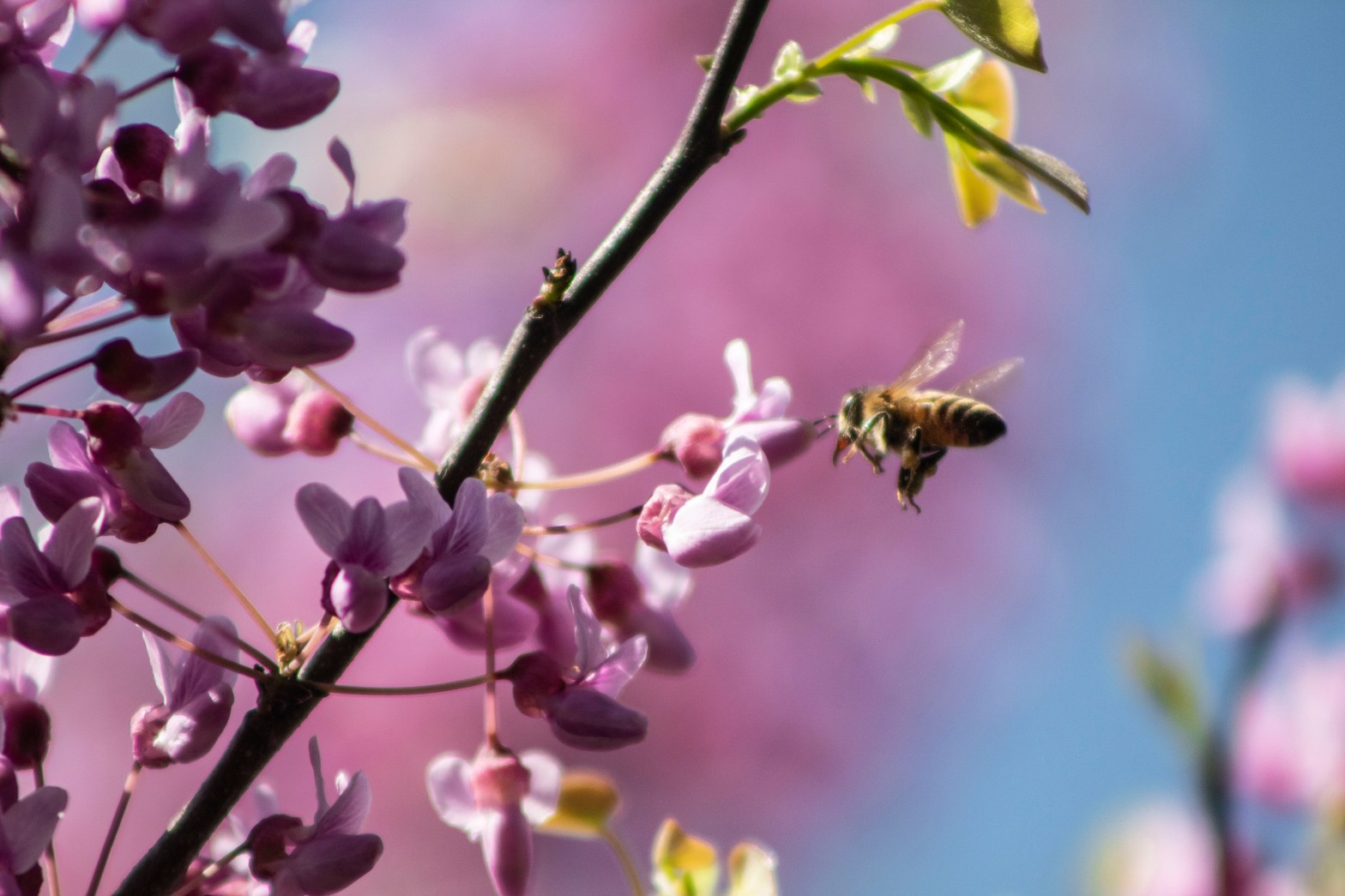
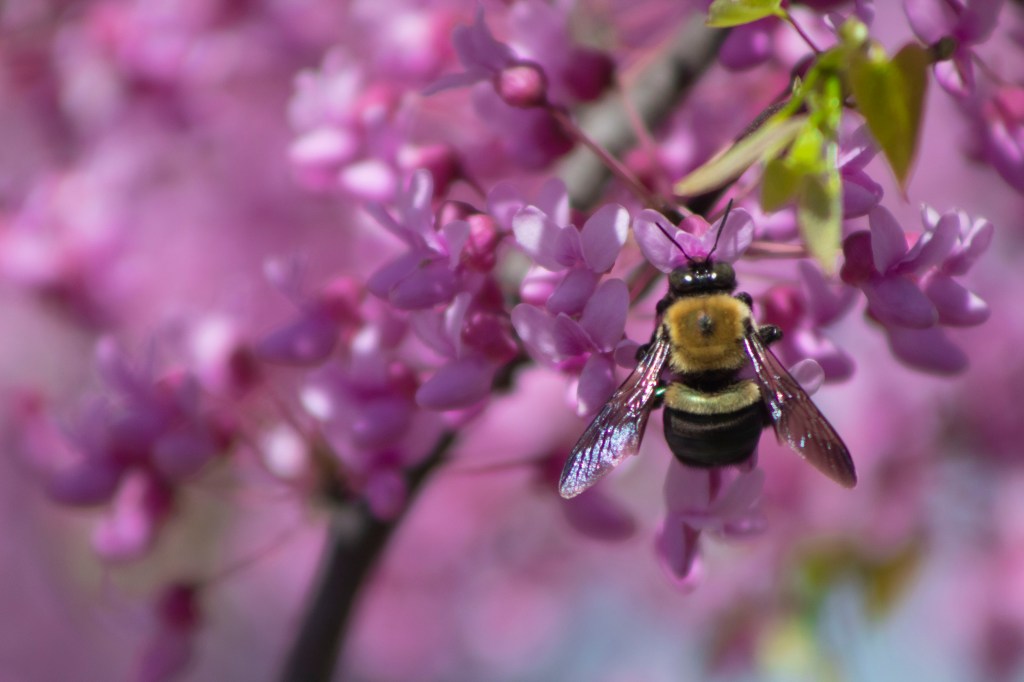
April showers have brought May flowers… and also bees! In North America, there are over 4,000 different species of native bees (not the murder hornets). Bees provide a crucial part in our ecosystem, but they are also fun subjects for outdoor photography. To take your own photos of these little workers, follow the steps below.
Patience is the number one ingredient you’ll need in order to take photos of bees. They fly quickly from flower to flower and are constantly moving. Even when not flying, their wings, antenna, or legs are in motion. Take a few minutes to observe the bees and let them adjust to you being there. Notice any flight patterns so you can predict when they’re going to hover or land on a flower. For just these few good photos, I took about 50 photos within two hours. Be patient and don’t be afraid of taking a lot of photos.
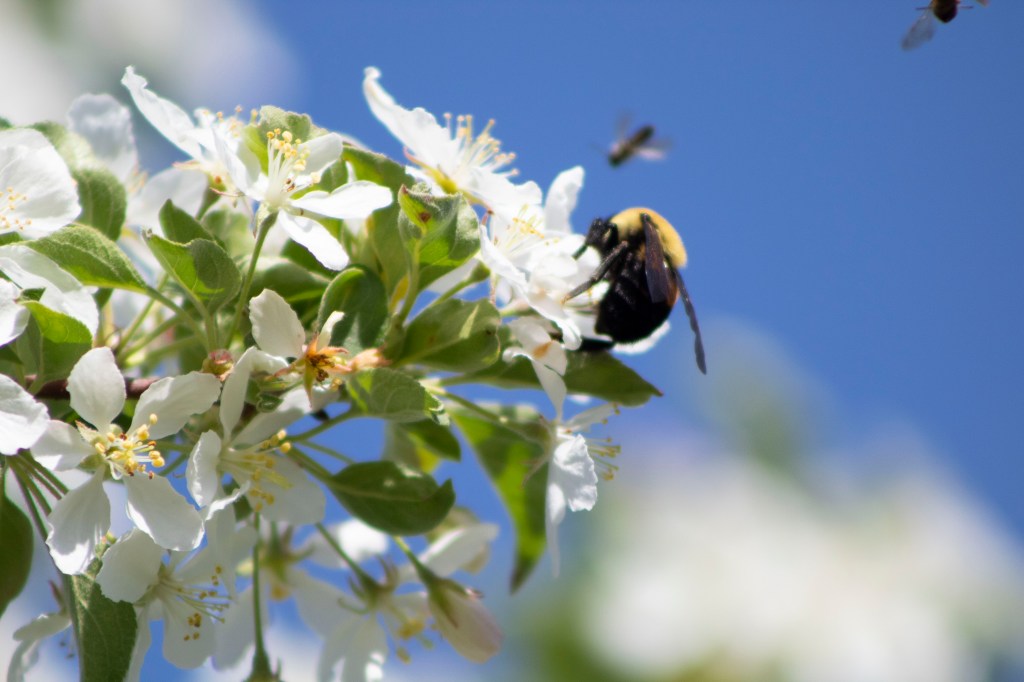

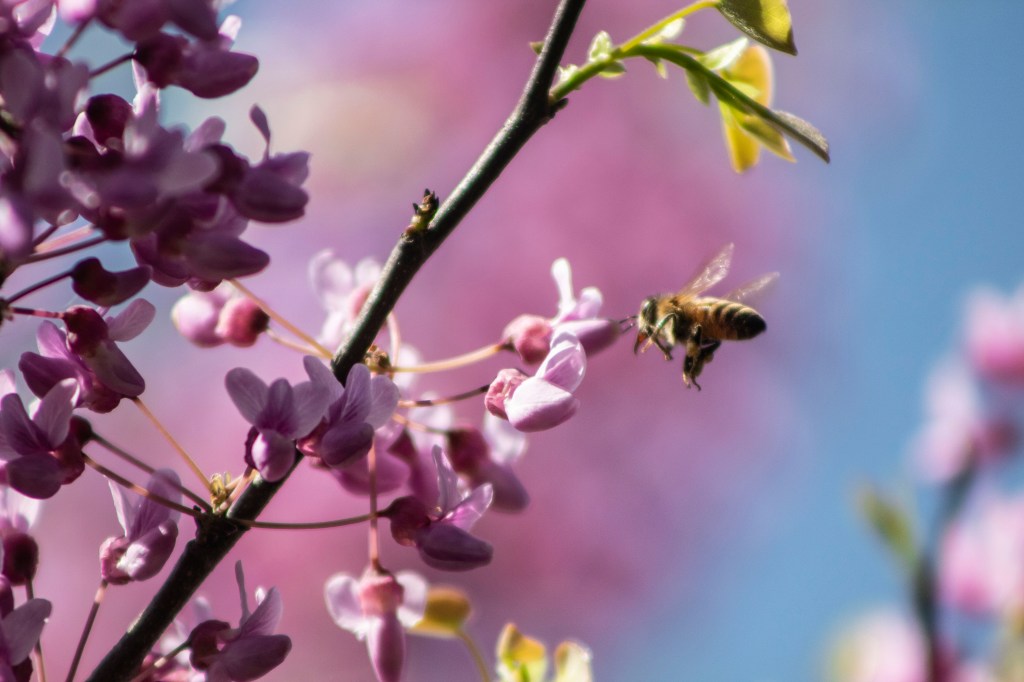
Finding flowers with flatter, more open surfaces are better to capture bees. You could get some bee butts if the flowers have much deeper crevices they have to crawl into, but flowers like sunflowers, chicory, butterfly weed, or zinnias are all wider and more colorful surfaces. In my pictures, I was photographing bees at eye-level by our redbud and crab apple flowering trees.
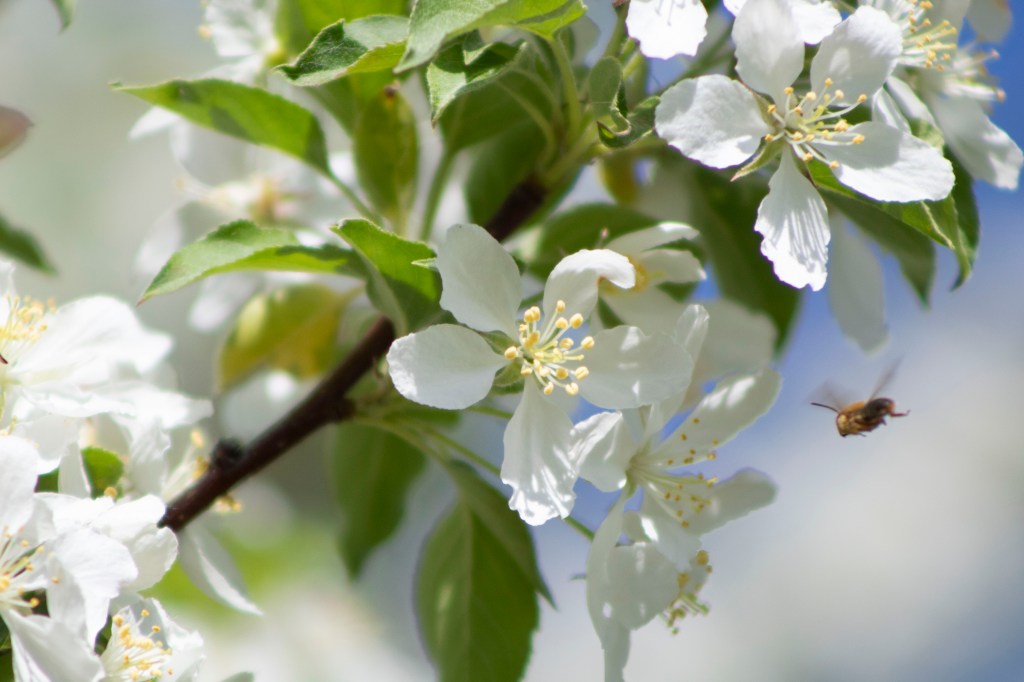
Different times of the day will determine how fast the bees are going. Early in the morning, bees and other insects have not had time to warm up, so they move much slower when the temperature is cooler. This allows your shutter speed to be slower than what it would be during the day. During midday and afternoon, your shutter speed will have to be much higher to capture their faster movements. A fast shutter speed also means a high ISO, so watch out for any noise in your pictures. I took mine in the afternoon with my 75-300mm zoom lens.
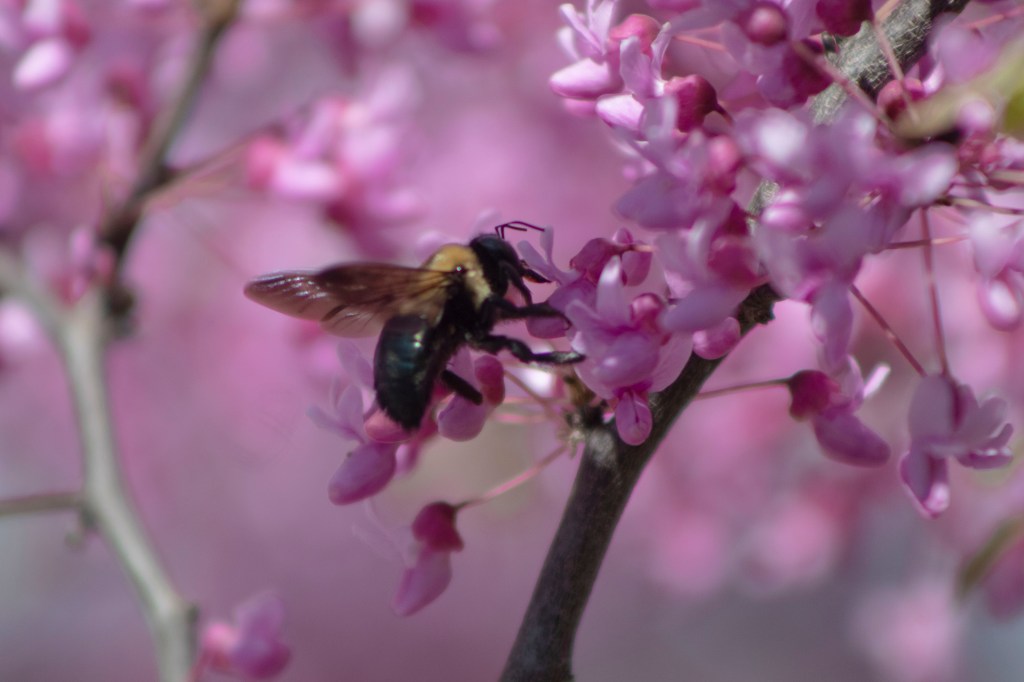
Tripods and certain lenses can be used to get your perfect shot. If you’re a little cautious about getting close to bees, use a zoom lens as I did so you can be far away from their buzzing. It’s also important to not get too close where it would disrupt the bee from its work. Setting up a tripod would be best in the morning while your camera is at a low shutter speed in low lighting. By midday and afternoon, you can go to handheld without worrying about shakiness.

Quick Note: If you’re allergic to bees, I would not recommend taking photographs of them! In the hours I spent outside with them, I was not stung or attacked by one. Just keep your movements slow and don’t provoke them.
 Hannah Matt