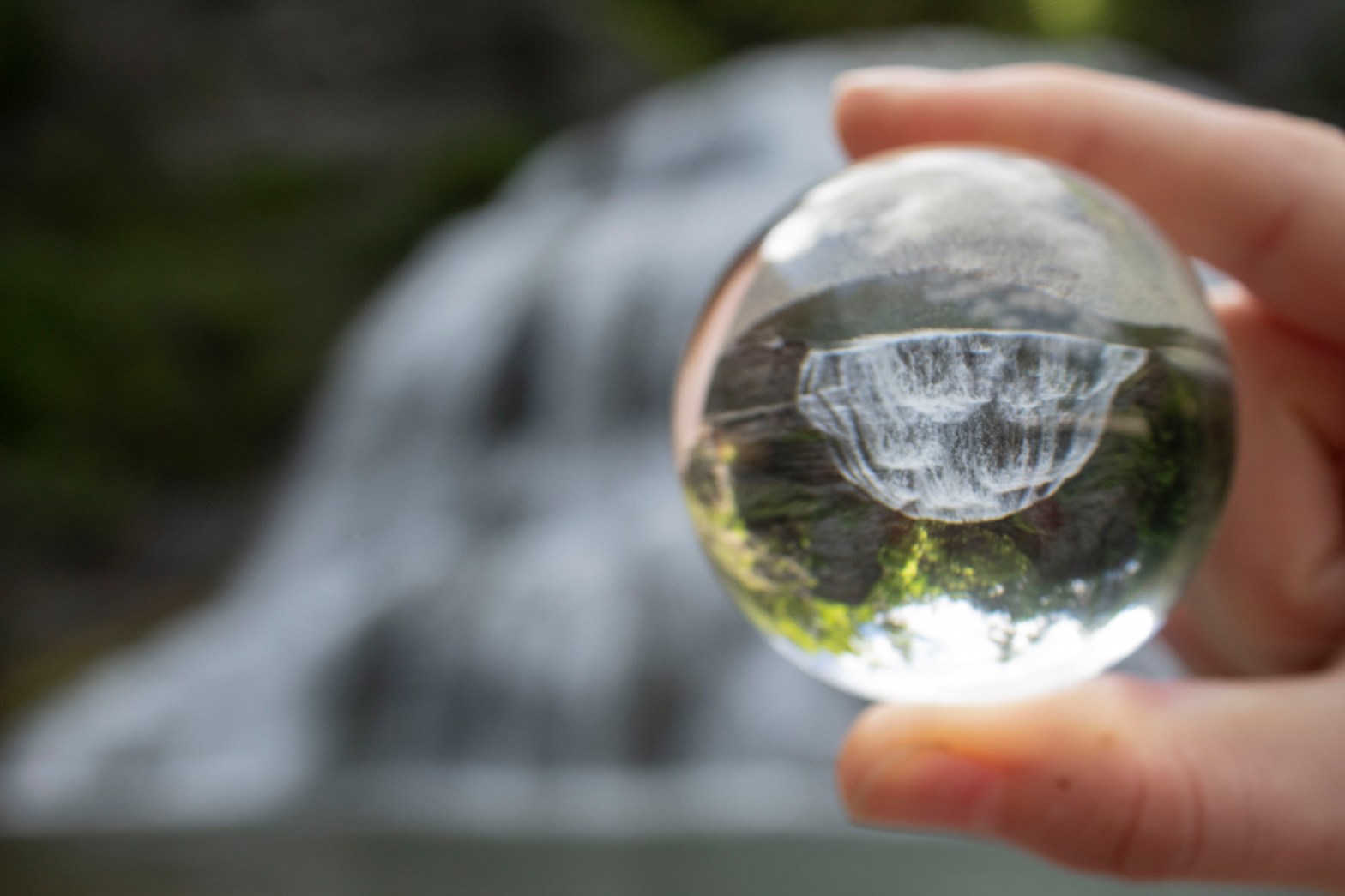
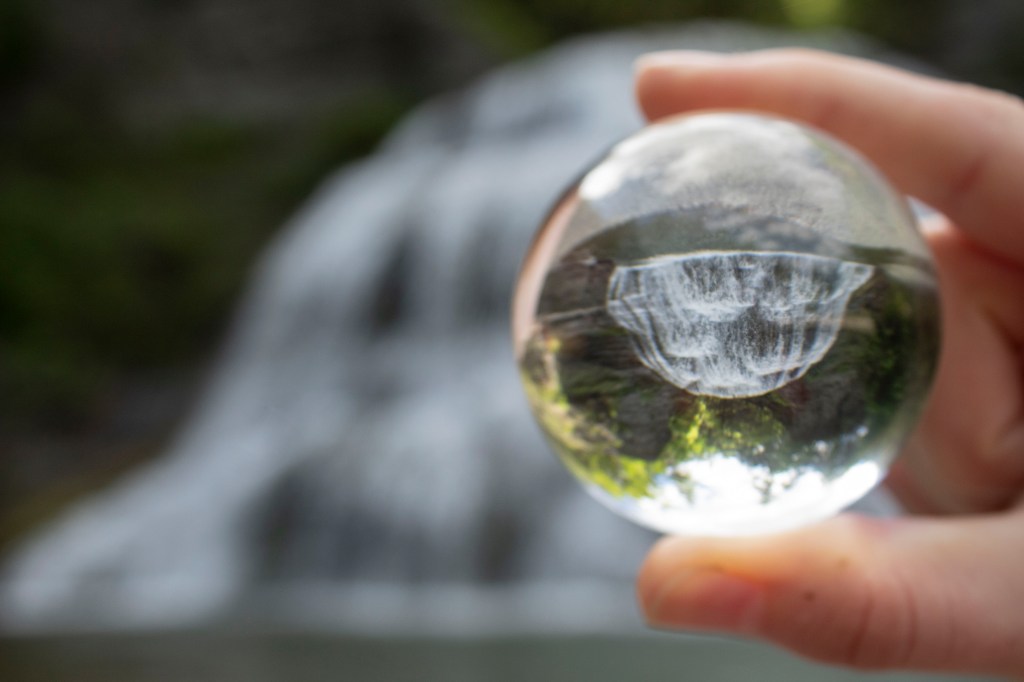
A lensball creates a cool photo effect by capturing a moment of time inside a small crystal ball. The lensball comes in a variety of sizes ranging from 60mm to 120mm. Currently I have an 80mm lensball which is a great size for traveling.

The inverted image is caught by light being bent while passing through the crystal (called refraction). And the sphere-shape of the crystal creates a fish-eye effect on the subject.
Some subjects that work great with lensball photography are water, landscapes, people, nature, architecture, and reflections. To create more dramatic looks, try out different angles, put it on the ground, shoot from below the lensball, or you can find cool Photoshop tutorials online.
Camera Settings:
- Experiment with Aperture- I like having a blurry background to keep the focus on the subject in the lensball (f/stop is usually around f/5 or f/4). However, a high aperture is good with landscapes when the background and the glass ball are both in focus.
- Keep your ISO low- If permitted, a lower ISO will help reduce grainy images.
- Shutter Speed Varies- Depending on time of day and if you’re holding the lensball or if it is on a stand, shutter speed should be at a speed to allow the most light in.
- Manual Focus- With manual focus, it is easier to control where the focus will be in your shot. Make sure the focus is on the subject within the ball for clear photos.


Composition:
- Keep the Balance- A flat surface or one with grooves to place the lensball are best for taking lensball photos. Stands are also recommended, or someone can hold the lensball.
- Lighting is Key- To reduce other reflections on the lensball, the subject must be well lit. You can use the weather app to see the time of sunset to shoot during Golden Hour. ***- The lensball is a magnifying glass, so it can burn things with direct sunlight. Be aware that grass and other items can ignite and start a fire. -***
- Being A Hand Model– positioning the lensball can be difficult without a flat surface, so I like to use my hands. Experiment different ways of holding the lensball to see which best fits your image. Having a volunteer to hold it is the best choice, though, so you can move your camera wherever it needs to go.

 Hannah Matt